
 Accommodation
 Day Visits
 Getting Here
 Snorkel & Dive
 Sustainability

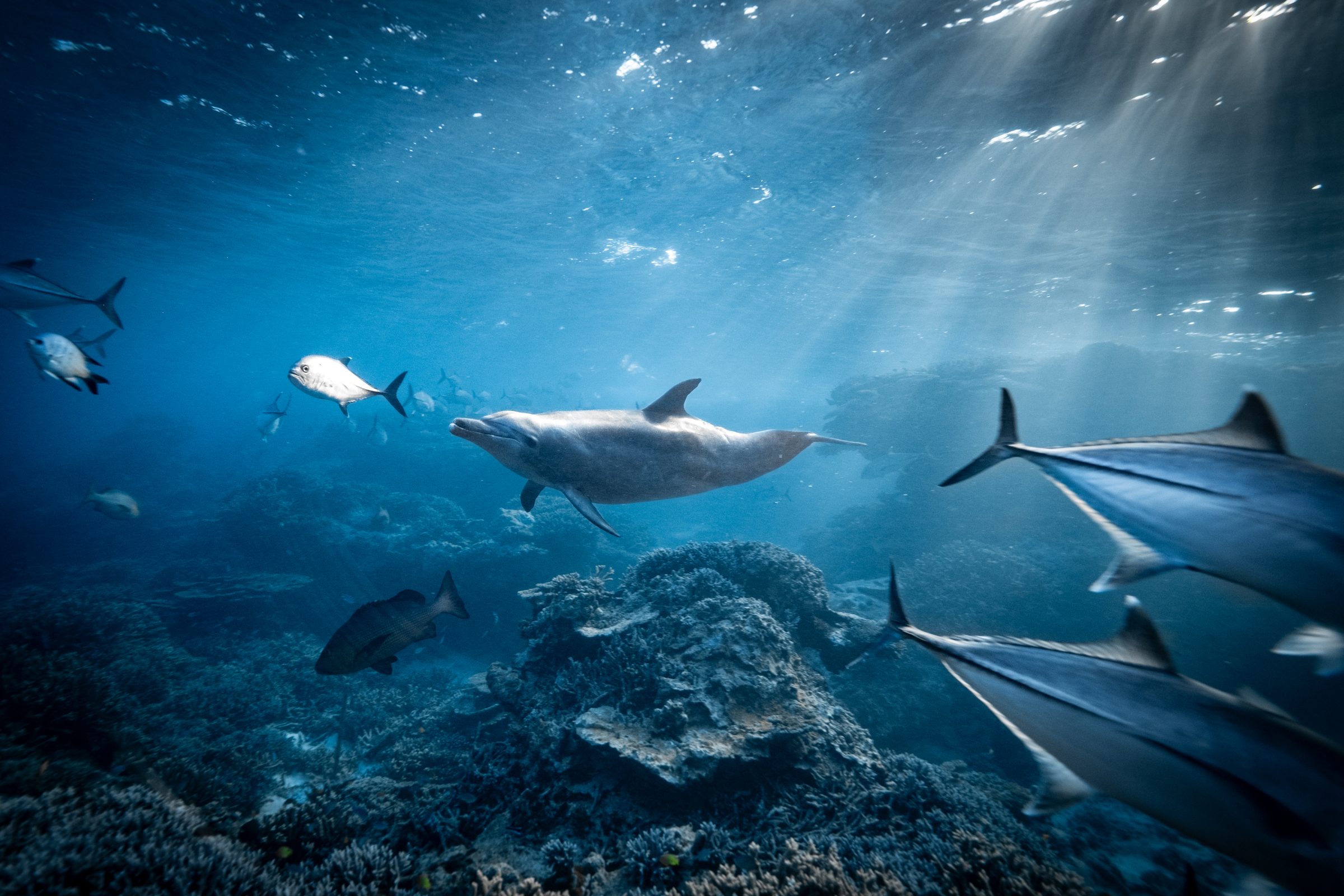
If you’ve snorkelled at Lady Elliot Island, you may have met Bubbles.
This common bottlenose dolphin is a familiar face around the island’s reef, easy to recognise by the notches in his fin and a V-shaped scar on his right flank. Now he’s become famous for something a little more unusual: his mealtime manners.
New research from the Leaf to Reef team at the University of the Sunshine Coast has documented a feeding strategy that has never been described in detail in a dolphin before. Bubbles chases fish until they regurgitate their food, then swoops in to eat what’s left.
A Tale of Two Observers
The story started with the island’s own team. Master Reef Guides Pieter Demmers and Jacinta Shackleton had long noticed Bubbles doing something odd around the trevally school. When Leaf to Reef PhD researcher Romney Edwards-Francis visited the island, she saw it for herself while snorkelling. Realising it hadn’t been documented in dolphins before, the team set out to study it properly.
It’s a lovely example of what happens when scientists and the people who spend their days on the reef work together.
How Bubbles Does It
Between 2021 and 2025, the team captured Bubbles using this tactic 11 times on the shallow reefs around Lady Elliot Island. Every time, the routine was the same:
- He picks out a school of Bigeye Trevally.
- He singles out one fish.
- He chases it until it regurgitates its meal.
- He quickly eats the leftovers.
Bubbles has been seen repeating this up to 10 times in a 30-minute stretch. Because the same individual did it again and again, the team believes it’s far more than a lucky one-off. Dr Asia Haines suggests he may have learnt to target the fish with the fullest bellies, which would give him the most rewarding meals.
The researchers also recorded intense bursts of echolocation clicks and low-pitched sounds during the chases. They think these may add to the fish’s stress and perhaps help Bubbles work out which trevally are carrying the biggest meals.
Why Steal Dinner?
Bottlenose dolphins usually forage in groups, but Bubbles was always on his own. The team’s leading idea is that this tactic saves energy. Letting the trevally do the hard work of catching food is far easier than chasing fast-moving prey solo. Edwards-Francis also notes that the trevally school is found in nearly the same spot almost every day, so it makes a reliable fallback when hunting hasn’t gone well.
Scientists call this kind of food-stealing kleptoparasitism. It’s common in the animal kingdom but usually opportunistic, and it’s rarely been recorded in marine mammals. The study, published in the journal Ecology and Evolution, is the first detailed account of it in a cetacean.
There are still open questions. The researchers don’t yet know whether Bubbles figured this out himself or picked it up from other dolphins. They also haven’t seen him eat a trevally, so this appears to be a shortcut to a snack, not a replacement for hunting. And they suspect behaviours like this are underreported in dolphins generally, simply because it’s so hard to watch animals underwater for long periods. Pairing drones with underwater surveys may help.
Not Such a Good Guy After All?
Does this ruin the dolphin’s reputation as the friendly, smiling “good guys of the sea”? Dr Haines says not at all. That image has more to do with our tendency to see human traits in animals, and the dolphin’s permanent “smile”. Dolphins are predators, and clever, adaptable ones.

Get Involved: Share Your Sightings
Have you photographed or filmed dolphins, or anything unusual, at Lady Elliot Island? The Leaf to Reef team welcomes contributions from visitors. Tag them at @leaf_to_reef on Instagram or @leaftoreef on Facebook, and keep an eye out for Bubbles on your next snorkel.
Can’t wait to meet Bubbles in person?
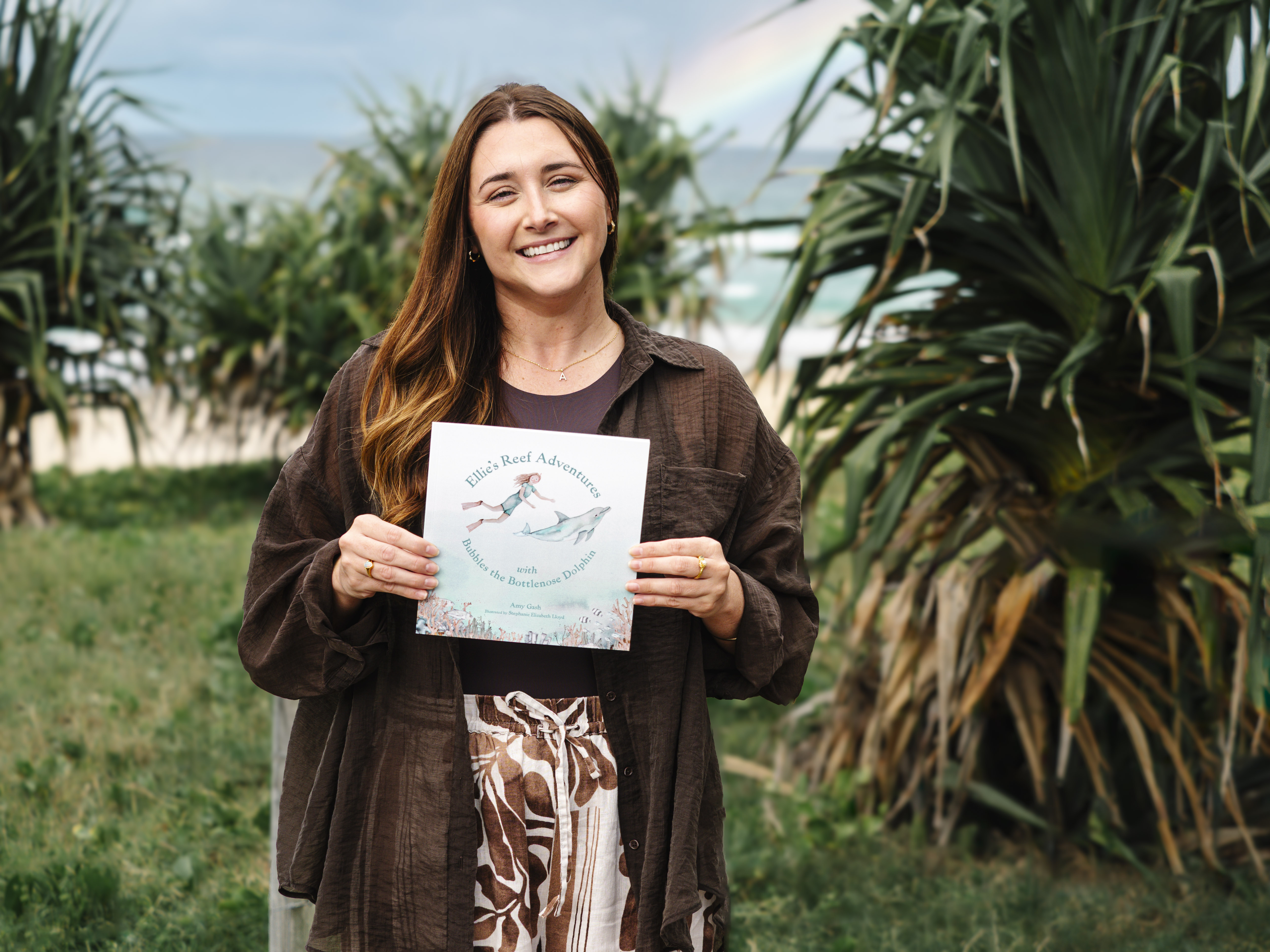
Get to know this reef favourite through Island Custodian Amy Gash’s children’s picture book, Ellie’s Reef Adventures with Bubbles the Bottlenose Dolphin, where Ellie and Bubbles explore the Coral Gardens and learn how everyone can help protect the Great Barrier Reef.
All Leaf to Reef research is conducted with the utmost care for animal welfare, with Animal Ethics approval through the University of the Sunshine Coast and permissions from the Great Barrier Reef Marine Park Authority.