
 Accommodation
 Day Visits
 Getting Here
 Snorkel & Dive
 Sustainability
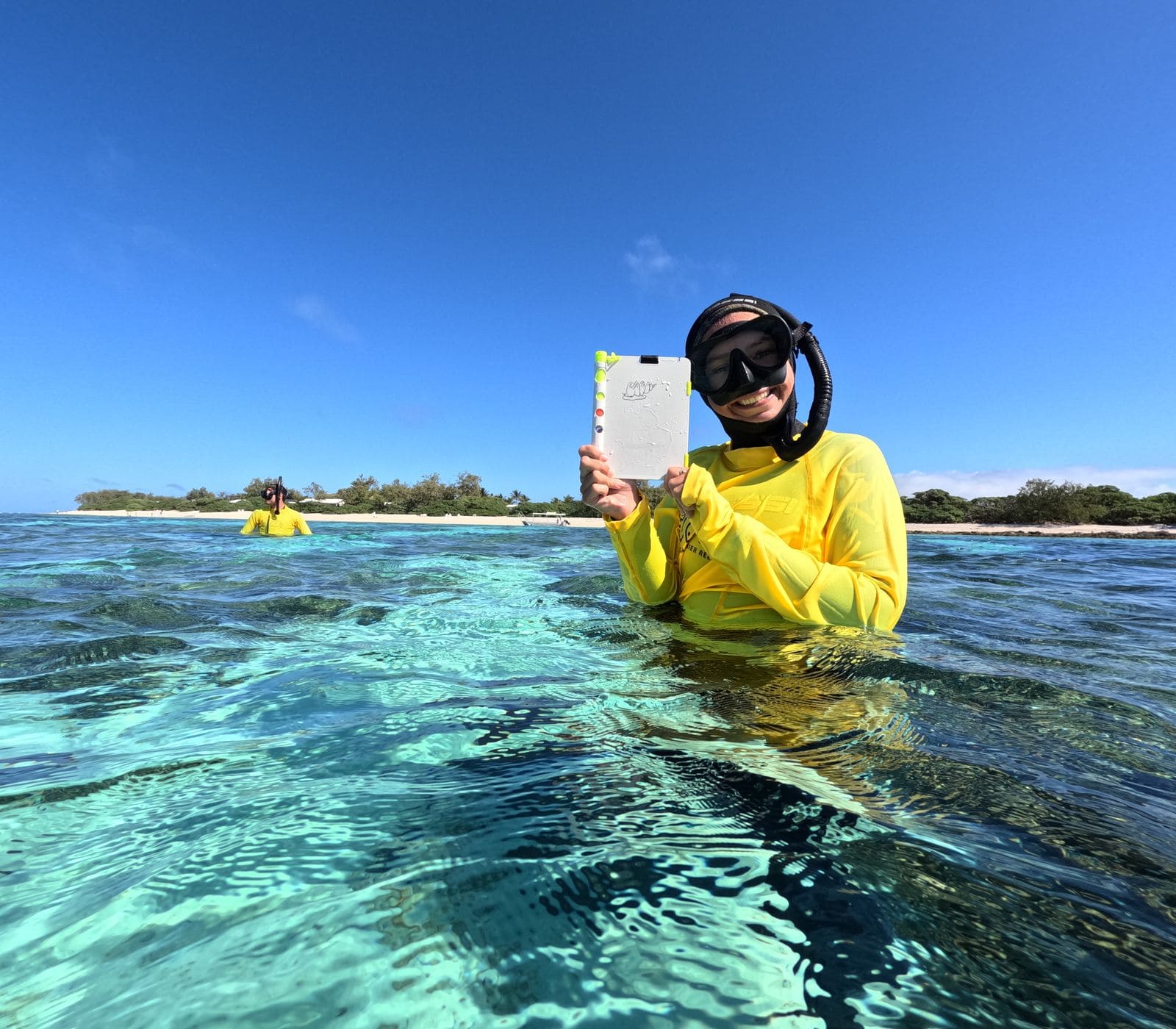
My name is Georgia, and I have what I consider to be one of the most incredible jobs in the world – I’m a Reef Protection Officer at Lady Elliot Island Eco Resort. Every day, I get to work on the southernmost island of the Great Barrier Reef, diving into crystal-clear waters and contributing to the conservation of one of our planet’s most precious ecosystems.
A Typical Week in Paradise
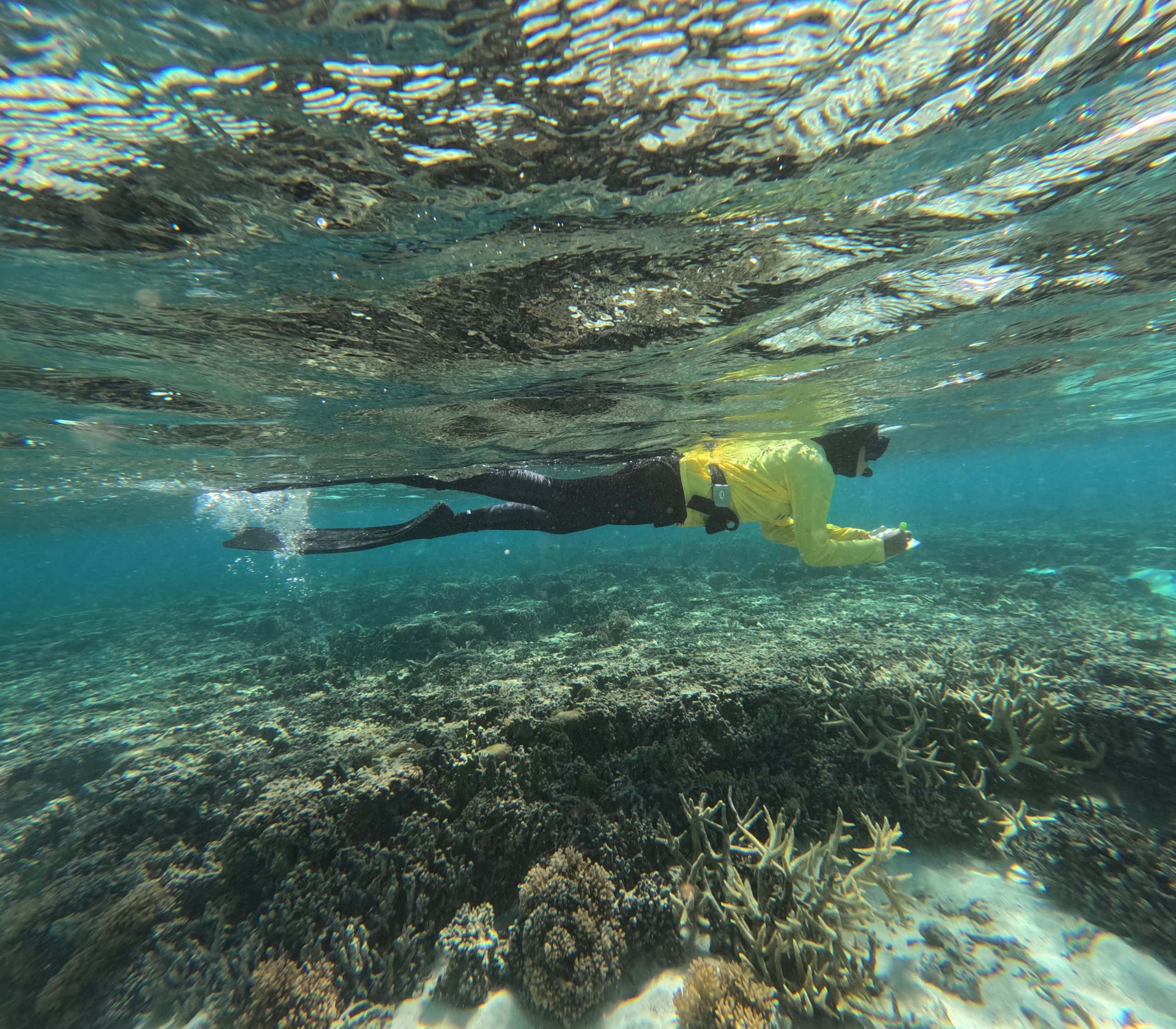
People often ask me what my days look like, and honestly, no two weeks are ever the same. I split my time between the office and the ocean. About half my week is spent diving and snorkelling, conducting surveys, and managing coral predators like crown-of-thorns starfish and drupella snails. The other half finds me at my computer, entering data, submitting surveys, and building databases that contribute to the bigger picture of reef health.
What might surprise people is just how much data entry is involved in reef protection work! And yes, despite being in sub-tropical Queensland, it can get surprisingly cold out on the water when you’re in it for most of the day.
Why a Reef Protection Officer
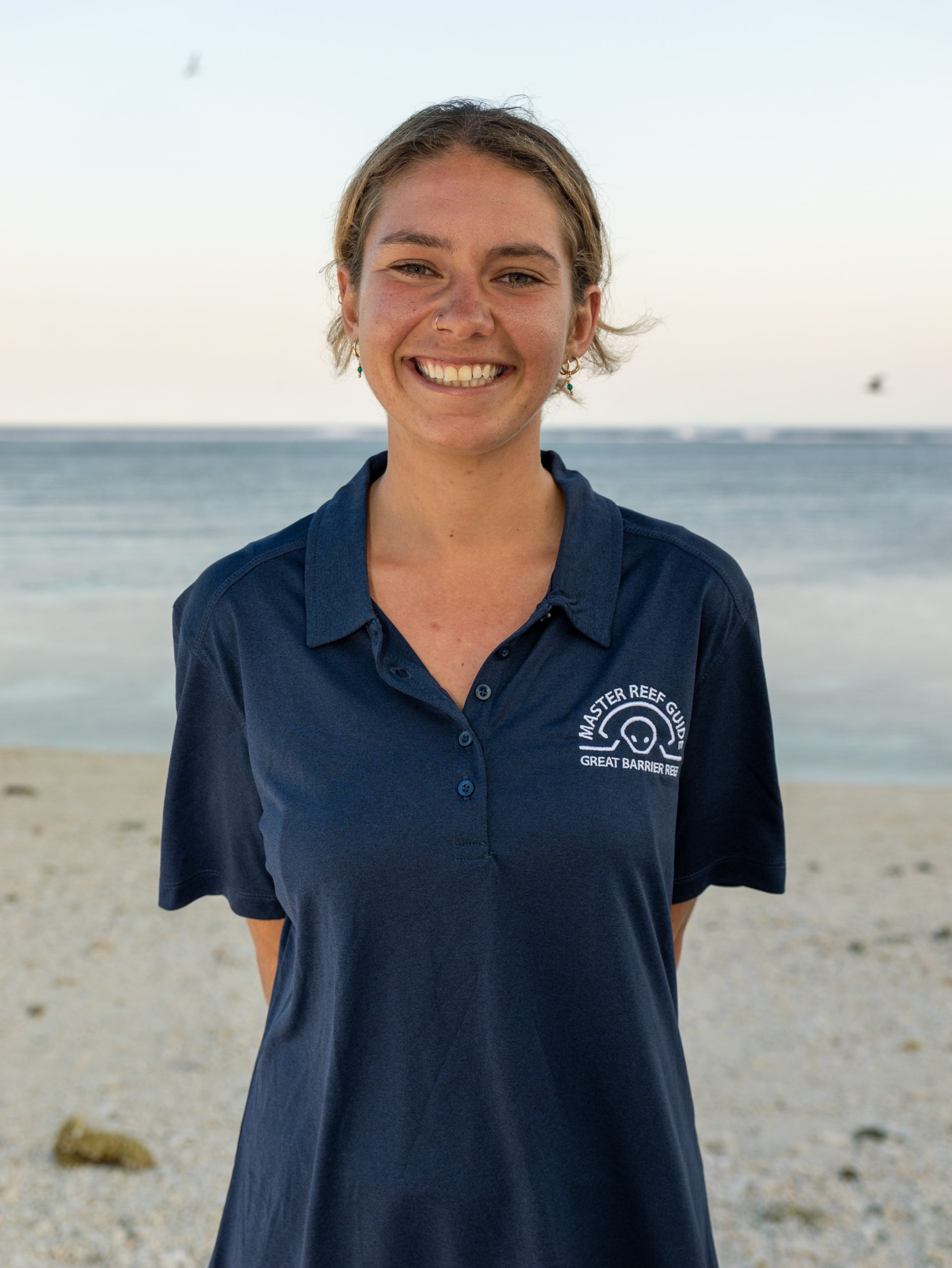
A Reef Protection Officer plays a vital role at Lady Elliot Island by helping to safeguard our surrounding marine ecosystem. Ensuring that tourism activities align with best environmental practices, protecting coral reefs and marine life from potential impacts. This important role is supported and funded by the Great Barrier Reef Marine Park Authority’s Tourism Reef Protection Initiative, which enables frontline conservation work to be carried out in partnership. The Tourism Reef Protection Initiative empowers Reef Tourism operators to monitor and protect their sites.
What Makes Lady Elliot Island Special
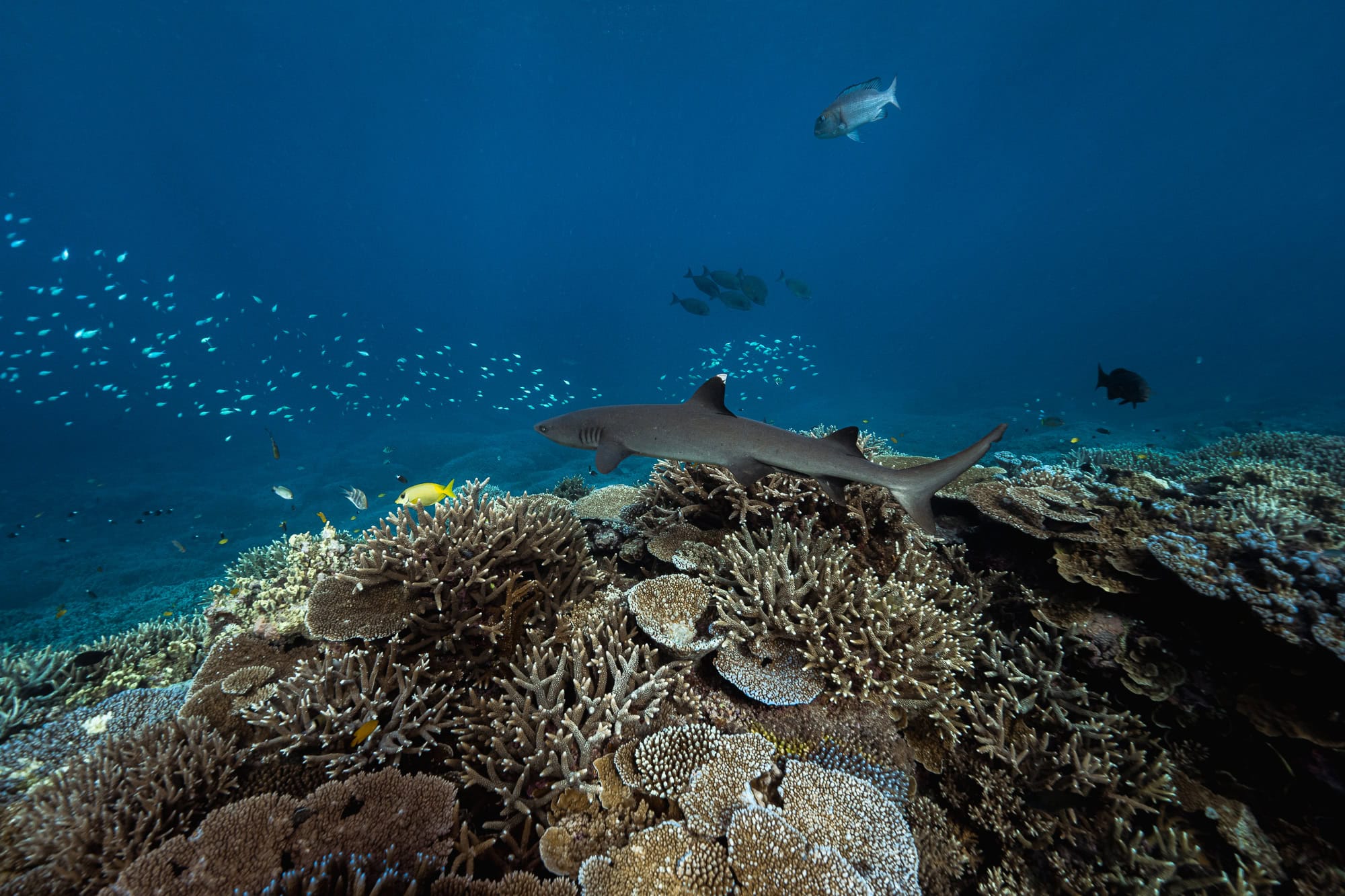
Every part of the Great Barrier Reef is unique, and Lady Elliot might be just a tiny dot in the grand scheme of things, but it holds a special place in the reef ecosystem. As the southernmost island on the entire Great Barrier Reef, we experience cooler waters and receive tremendous energy from winds and waves that northern reefs are often protected from. The island’s proximity to the continental shelf brings nutrient-rich, cooler water into our region, making Lady Elliot wonderfully wild and absolutely teeming with life.
Unforgettable Encounters
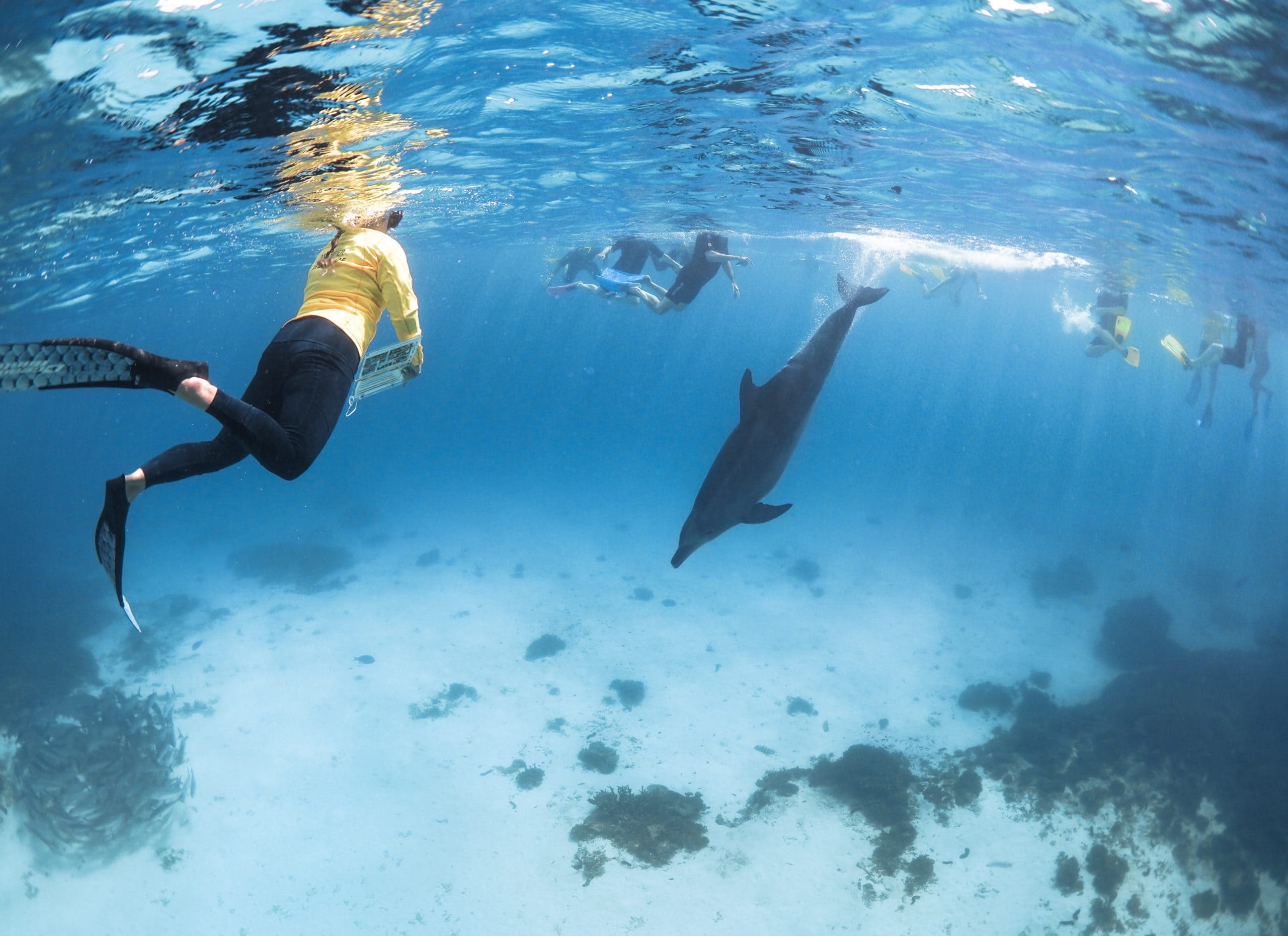
I’ve been incredibly fortunate to witness some extraordinary wildlife encounters during my time here. Last year, I had an experience I’ll never forget – a mother and calf humpback whale approached our group while we were already in the water. For 45 minutes, we simply stared at each other, neither moving. Meanwhile, Bubbles the local dolphin was bouncing around in the background, desperately trying to get some attention from all of us! These moments remind me why I fell in love with this work in the first place.
The Science Behind the Beauty
My role involves collecting various forms of data that contribute to the Great Barrier Reef Marine Park Authority’s Eye on the Reef monitoring projects. Every week, I conduct surveys at our most frequently visited sites, counting fish species, monitoring for bleaching, tracking coral predators, and recording sightings of everything from sea cucumbers to sharks, red bass, coral trout, and barracuda.
This consistent data collection helps us establish what’s “normal” for our reef system, which is crucial for identifying changes over time. You can’t protect something if you don’t know it’s changing, and having accurate, long-term data is essential for developing effective management strategies.
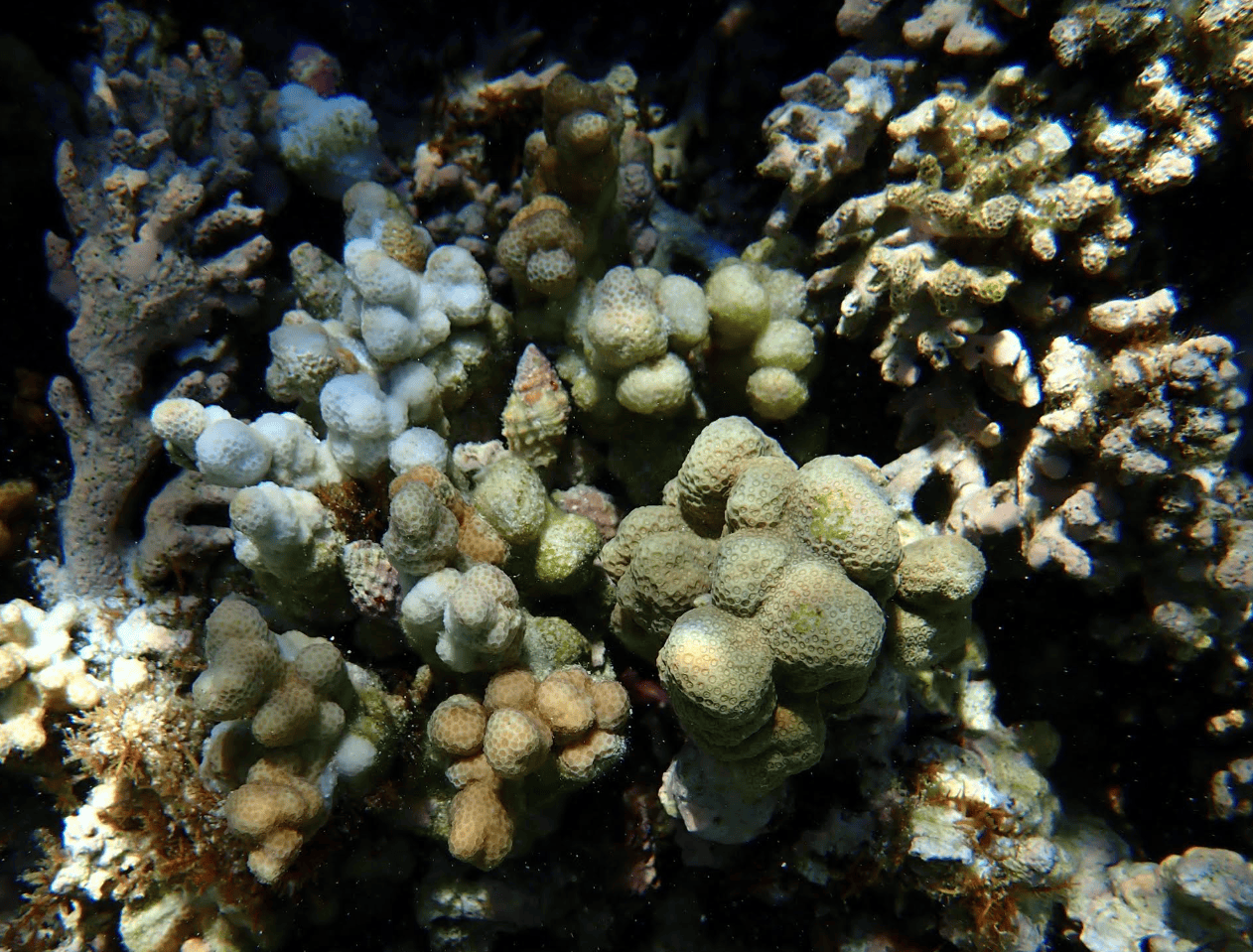
One project I’m particularly excited about involves monitoring drupella, which are small gastropods that eat coral and can form massive aggregations. We’re establishing a monitoring program to better understand their behaviours and patterns, helping us create thresholds for managing outbreak densities.
Technology Meets Conservation
Modern reef monitoring involves some incredible technology. I use AI through platforms like ReefCloud to help classify corals and track changes over time. GPS monitoring and georeferenced maps guide my fieldwork and help create detailed mapping of our reef system. It’s amazing how technology can enhance our understanding and protection of these ancient ecosystems.
Connecting Guests with the Reef
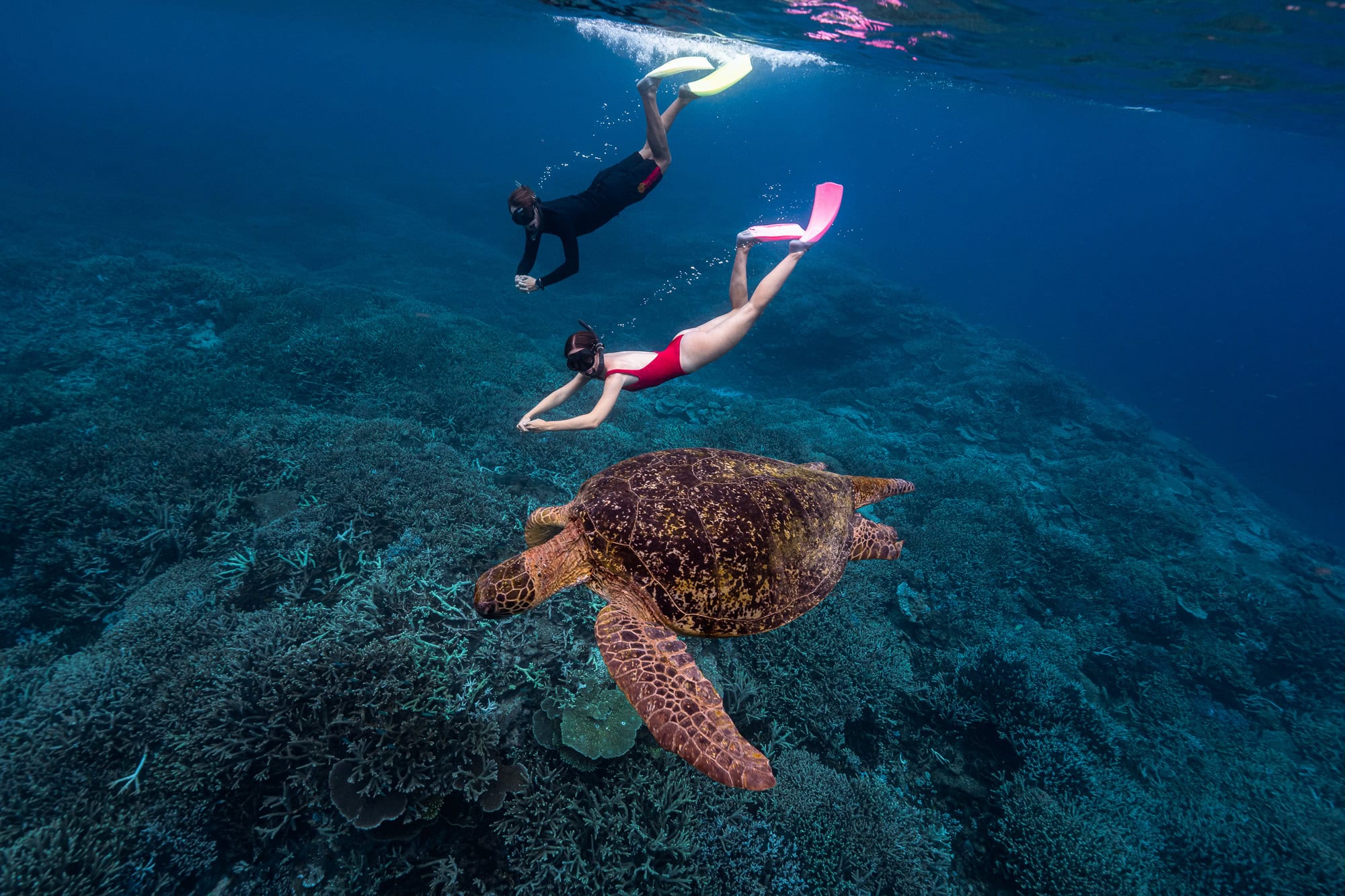
One of the most rewarding aspects of my work is watching resort guests discover the reef for themselves. The ecosystem often does the connecting organically. When people experience firsthand the incredible wildlife and coral formations, their natural curiosity takes over. They start asking questions, wanting to learn more, and the deeper their understanding grows, the stronger their connection becomes.
Addressing the Biggest Threat
Climate change remains the greatest threat to reef systems worldwide, and education is our most powerful tool in addressing this challenge. Our Guest Activities team does an amazing job helping guests understand and appreciate the reef ecosystem. When people care about something, they’re more likely to protect it.
Hope in Recovery
One of the most common misconceptions I encounter is that bleached coral equals dead coral. While the 2023/2024 bleaching event was absolutely heartbreaking to witness, by May 2024, the recovery was striking. The reef looked so much healthier, and today, you’d never know the bleaching had occurred. The Great Barrier Reefs overall health has been portrayed in many different ways, but it is a resilient, living system that’s increasingly challenged by climate change but certainly not beyond hope.
My Journey to Lady Elliot
I completed my marine and coastal science degree in Newcastle and first came to Lady Elliot Island during a university placement. I fell in love with this place immediately. After graduating, I obtained my coxswain’s license and came straight back. I’ve held several roles on the island, including Activities Supervisor, where I focused heavily on interpretation and education before moving into my current reef protection role this year.
Watching the island grow and change over time, getting to know it more intimately, has left me with endless questions about this incredible ecosystem. My role as Reef Protection Officer gives me the opportunity to help find answers to some of these questions while contributing directly to the reef’s health and future.
Every day working on Lady Elliot Island reinforces my belief that we’re part of something much larger than ourselves. This reef, this island, this ecosystem is not just where I work, it’s what I’m passionate about protecting for future generations. And honestly, I can’t imagine doing anything else.
Georgia is the Reef Protection Officer at Lady Elliot Island Eco Resort, where she combines scientific research, conservation work, and education to protect one of the world’s most important coral reef ecosystems.
Images and Footage: Copyright Commonwealth of Australia (GBRMPA), Jeremy Sommerville, Ross Long, Courtney Adamson.The Tourism Reef Protection Initiative is funded by the Great Barrier Reef Marine Park Authority as part of the Australian Government’s Reef Protection package.
References:
- https://www2.gbrmpa.gov.au/our-work/programs-and-projects/crown-thorns-starfish/coral-predator-outbreaks
- https://www2.gbrmpa.gov.au/our-work/programs-and-projects/crown-thorns-starfish-management
- https://www2.gbrmpa.gov.au/our-work/programs-and-projects/tourism-industry-activation-reef-protection-initiative