
 Accommodation
 Day Visits
 Getting Here
 Snorkel & Dive
 Sustainability
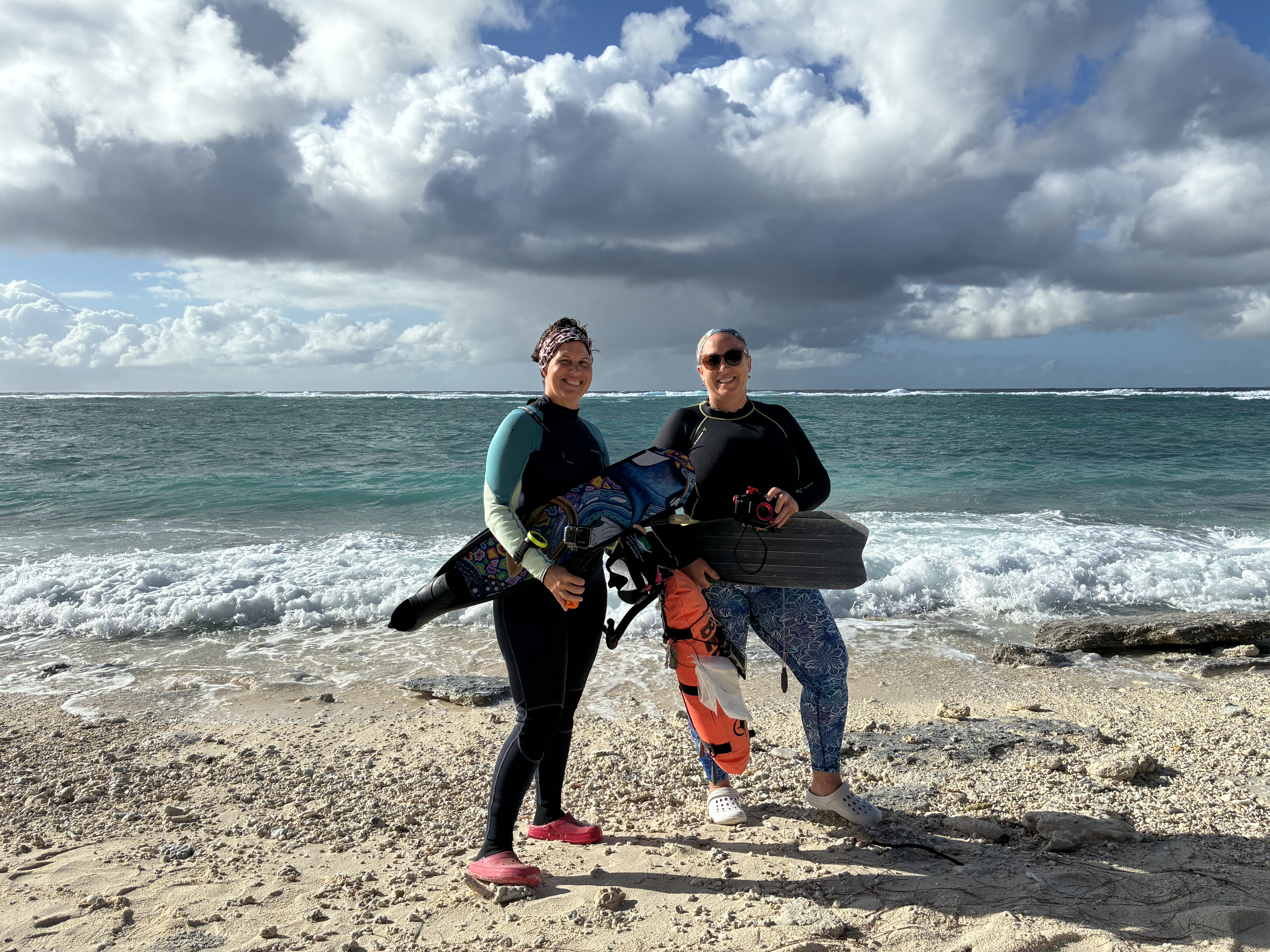
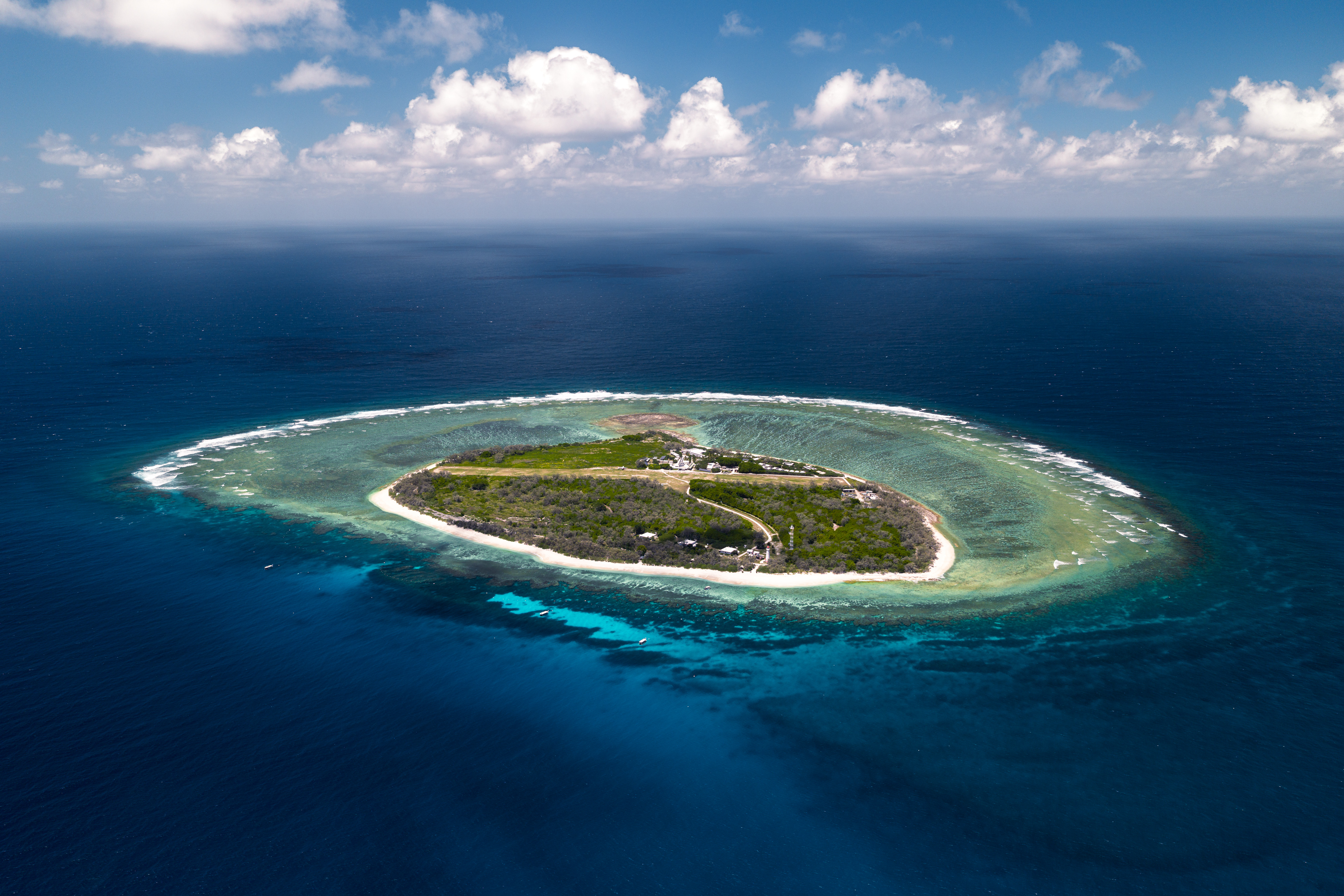
There is something quietly extraordinary about Lady Elliot Island. On the surface, it is a place of stunning beauty, but beneath that beauty, something equally remarkable is happening. A dedicated team of scientists has made this island their field laboratory, unravelling the connections between land, sea, and the creatures that call this place home.
This is the work of the Leaf to Reef research team from the University of the Sunshine Coast. Let’s dive into two of their most fascinating ongoing projects: sea turtle health and the mysterious red-tailed tropicbird.
Leaf to Reef: Understanding Lady Elliot Island’s Biodiversity
Launched in 2019, the Leaf to Reef project was born from a simple but profound question: what happens to an island’s wildlife when you give nature a helping hand?
Lady Elliot Island has been the subject of a long-running revegetation program, gradually restoring the island’s native vegetation after decades of historical clearing. Supported by funding from the Reef Islands Initiative, the project seeks to understand how this restoration ripples outward through the entire ecosystem, from the island’s soil and groundwater to its reef flats, birdlife, and marine creatures. The island is, in many ways, a living experiment. And what the scientists are finding is both surprising and deeply encouraging.
Sea Turtles: Health Checks, Bite Rates, and a Tag-Free Future
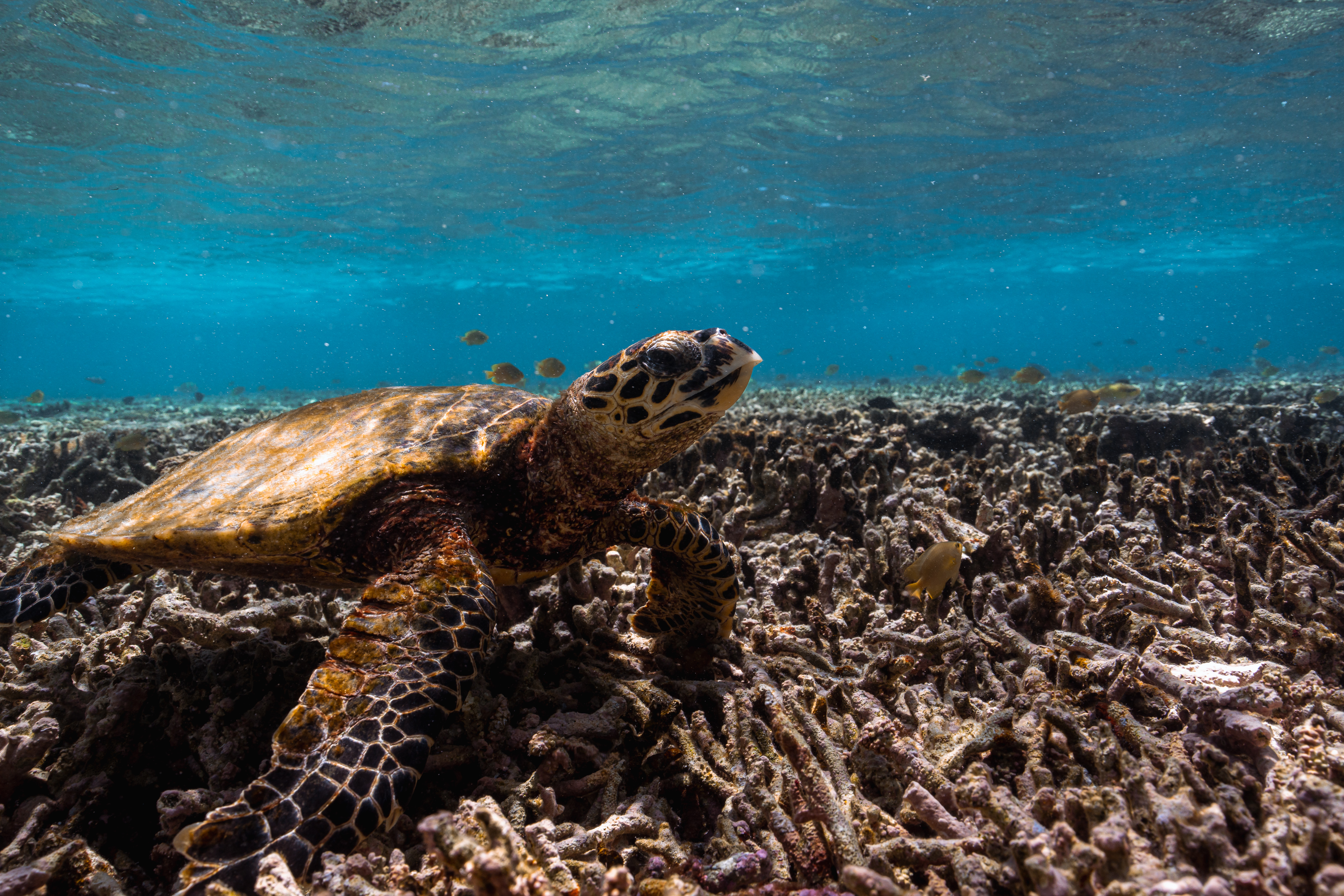
If you have snorkelled around Lady Elliot, chances are you have drifted past one of the island’s most beloved residents, a juvenile green or hawksbill turtle. What you may not have known is that this turtle might already be known to science.
PhD researcher Noémie Blais conducts comprehensive health checks on the turtles that forage on Lady Elliot’s reef flats year-round, involving body condition assessments, measuring weight, temperature, and size. The team is also identifying what these turtles are eating and tying their diet back to the nutritional value of food sources found on the reef flats.
By capturing video footage of turtles foraging and counting bite rates, the team can quantify just how significant a role these turtles play as herbivores on the reef. Rather than using physical tags, individual turtles are now identified through their unique facial scale patterns, as distinct as a human fingerprint, and added to a growing photo database.
This research connects directly to a fascinating discovery. Nutrient testing of the island’s groundwater has revealed elevated levels of Nitrogen that, if those levels reached the reef, could potentially trigger high algal growth. Yet the reef flats remain remarkably balanced. The team suspects juvenile green turtles may play a role in helping to maintain the delicate balance between coral and algae. This research is underway, but could provide a link between the revegetation program, the power of marine protected areas, and reef health.
Get Involved: The Tag-Free Turtle Project
The Tag-free Turtle Project is a citizen science initiative inviting anyone who has photographed or filmed a turtle at Lady Elliot Island to contribute to the research database. Submit your turtle photos or videos, past or present, along with the date, and location around the island (such as Coral Gardens, Lighthouse Bommie or the Lagoon).
Whether your visit was last month or ten years ago, your contribution matters!
 @thetagfreeturtleproject
Red-Tailed Tropicbirds: Mysteries, Monogamy, and Genetic Detectives
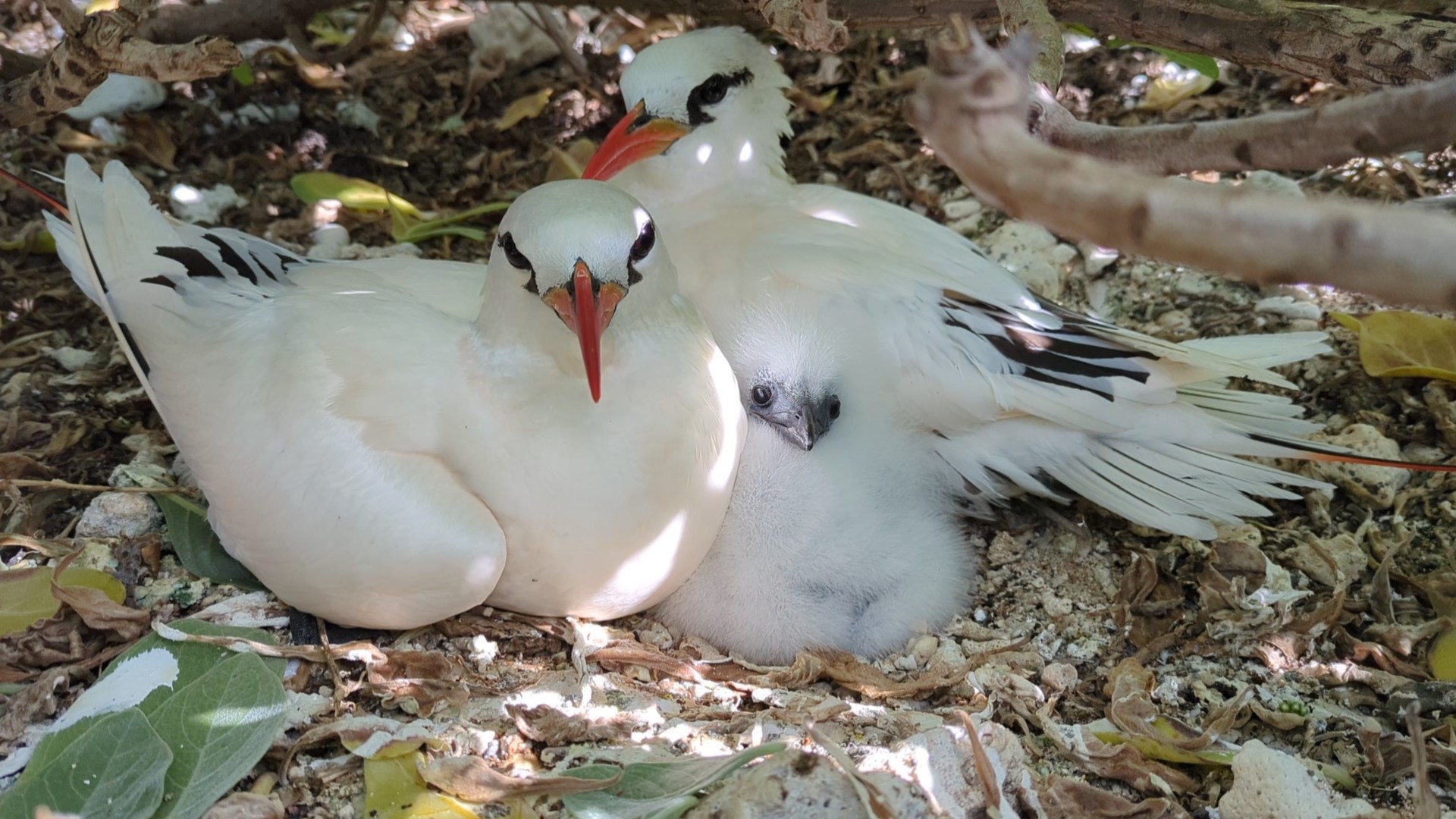
Unmistakable with their long red tail feathers, the red-tailed tropicbird is one of Lady Elliot Island’s most charismatic residents, and one of the more puzzling.
Twice a year, the team bands every bird that lands on the island and every chick that hatches, allowing researchers to build detailed life histories over time. One bird banded as a chick in 1997 was recaptured decades later at 26 years old, making him one of the oldest recorded red-tailed tropicbirds in the world. Field cameras at each active nest capture feeding patterns, shift changes between parents, and the occasional special moment of a bird laying its egg on camera.
The colony on Lady Elliot Island is strikingly young. The first pair appeared in 1983, and the population steadily grew over the following decades. The planting of octopus bush through the revegetation program has created suitable nesting habitat around the resort cabins, which they now use every year.
To date around 64 individuals have been recorded visiting the island, though only six to 10 pairs breed each year. A recently published paper by the Leaf to Reef team found that birds here are genetically similar to populations at Raine Island in the northern Great Barrier Reef and Ashmore Reef in Western Australia, suggesting birds may be travelling thousands of kilometres to find mates at Lady Elliot.
A few things that may surprise you: tropicbirds cannot walk on land and instead shuffle and crawl. They are faithful partners, returning to the exact same nest scrape year after year, though the team has also documented several divorces! There are only three species of tropicbird in the world, and their closest living relative is thought to be Kagu, a flightless bird from New Caledonia.
Get Involved: Spot a Tropicbird
Keep an eye out for nesting tropicbirds and let the Activities team know if you spot one. Follow the team’s ongoing work at @leaf_to_reef on Instagram and Facebook.
 @leaftoreef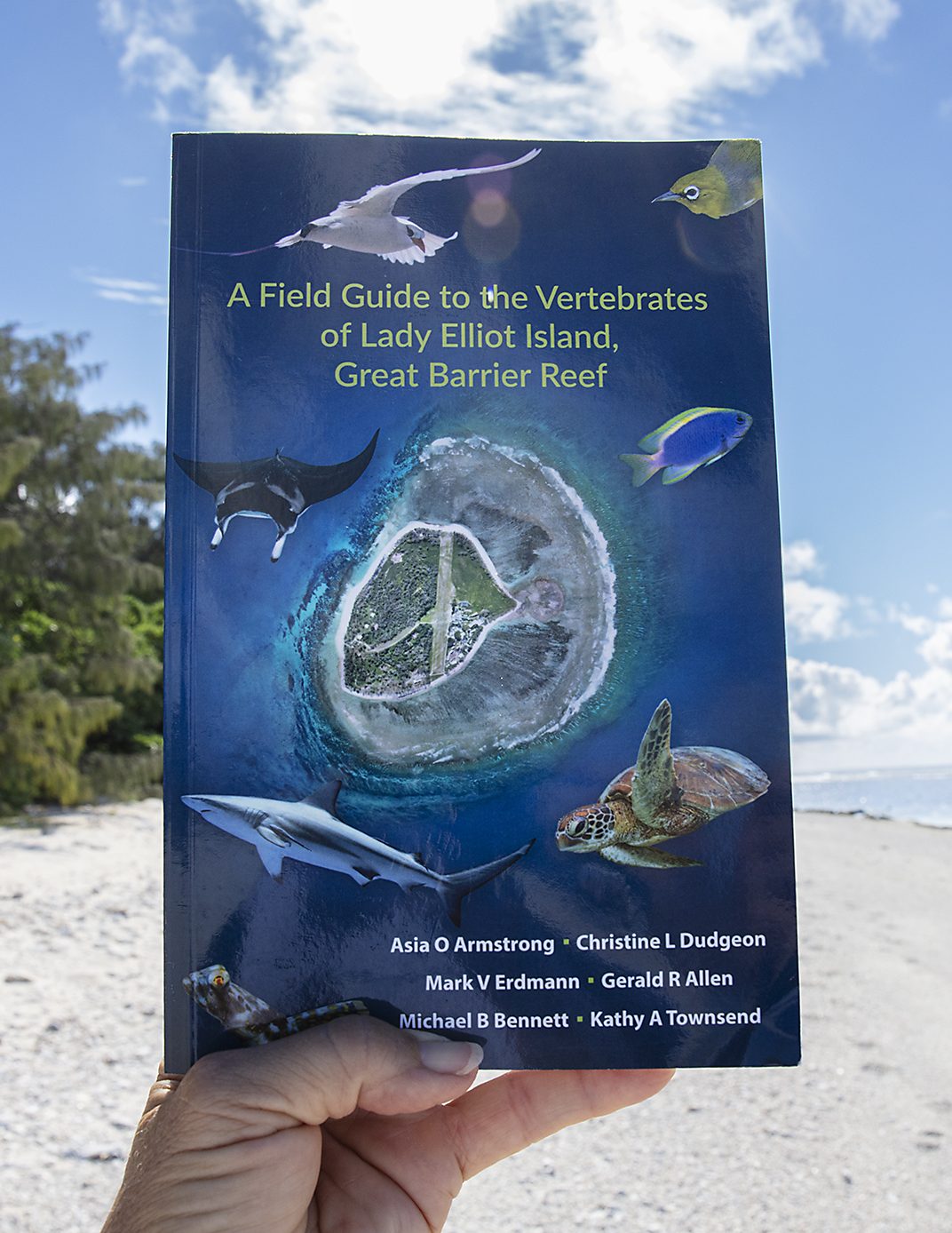
The New Field Guide to Lady Elliot Island
More than six years in the making, A Field Guide to the Vertebrates of Lady Elliot Island, Great Barrier Reef, is a brand-new comprehensive field guide to for Lady Elliot Island.
Authored by the Leaf to Reef team and supported by citizen science and the island resort team, the book features 800 species across birds, sharks, rays, fishes, mammals, and reptiles.
Whether you are a first-time visitor or a returning guest, it is the perfect companion that celebrates the island’s biodiversity written by the very people who know it best.
The Leaf to Reef project is proudly supported by the Reef Islands Initiative.
All Leaf to Reef research is conducted with the utmost care for the animal’s welfare, with Animal Ethics approval through the University of the Sunshine Coast, and permissions from the Great Barrier Reef Marine Park Authority.